
Tag: dungeons & dragons (Page 1 of 5)

Converting Curse of Strahd to Cortex Prime Part 4 – Catalysts

Today I’m continuing discussion about guidelines for converting the epic 5th edition Dungeons & Dragons campaign Curse of Strahd to Tales of Xadia: The Dragon Prince Roleplaying Game, a game powered by the Cortex Prime system. If you don’t know why, check out Part 1, and if you want to talk mods (AKA rules hacks), check out Part 2 and Part 3. It’ll help if you have thorough knowledge of Curse of Strahd and probably a good sense of how Catalysts in Tales of Xadia work for this article to make sense.

After a long wait, here are the Catalyst character sheets for a few of the major Game Moderator Characters (GMCs, the Tales of Xadia term for NPCs). I’m gonna hit you with the “big ones” first, Ireena and Strahd, since they form the basis of the whole campaign. After that, I’m going to show of Volenta (one of Strahd’s brides) since I plan to use her very early on. Finally, we’ll close out with GMC stat blocks for the village of Barovia, with a focus on Ismark the Lesser, just to juxtapose what an “important” GMC that isn’t a Catalyst might look like, and why I chose going in that direction with him as opposed to making him a Catalyst.

I’ll probably tackle the big artifacts in the next article, but as of this writing I haven’t started outlining anything yet. Feel free to hit the comments and tell me what (else?) you want to see!

So grab your Tarokka deck and figure out who your Fated Ally card reveals, because we’re headed into Barovia!

Continue reading

Converting Curse of Strahd to Cortex Prime Part 3 – Magic & Corruption

Today I’m continuing discussion about guidelines for converting the epic 5th edition Dungeons & Dragons campaign Curse of Strahd to Tales of Xadia: The Dragon Prince Roleplaying Game, a game powered by the Cortex Prime system. If you don’t know why, check out Part 1, and if you want to see how I handle the Doom Pool mod, PC species, and adventuring gear, check out Part 2. It’ll help if you have thorough knowledge of Curse of Strahd, but you only need passing familiarity with Tales of Xadia (AKA TOX), so here’s the Rules Primer to help you catch up.

I’ll be focusing this article on two additional elements of conversion: magic and corruption. Magic includes playing spellcasters, spells and scrolls, and a little more discussion of magical abilities. After that, I’ll talk about how I’m using Corrupted stress to model supernatural afflictions like lycanthropy, vampire bites, stuff the PCs might interact with in the Amber Temple, and more. I’ll save the big name artifacts of the campaign — things like the Sunsword — for a future article.

So grab your wolfsbane and the sunburst holy symbol of the Morninglord, because we’re headed into Barovia!

Continue reading

Converting Curse of Strahd to Cortex Prime Part 2 – Species, Gear and the Doom Pool

Today I’m covering the specifics of converting the epic 5th edition Dungeons & Dragons campaign Curse of Strahd to Tales of Xadia: The Dragon Prince Roleplaying Game, a game powered by the Cortex Prime system. If you don’t know why, check out Part 1, as well as my rant on why this conversion is such a match made between the campaign’s tone and the game’s mechanics. It’ll help if you have thorough knowledge of Curse of Strahd, but you only need passing familiarity with Tales of Xadia (AKA TOX), so here’s the Rules Primer to help you catch up.

I’ll focus on the major elements of conversion today. One big wrinkle is that I’ll be using Cortex Prime’s Doom Pool, which is a mod not normally used in Tales of Xadia, but one I find perfect for capturing the atmosphere of dread that hangs palpably over Barovia. So, I’ll spotlight that first. Then I’ll dive into kin AKA species, and finally equipment. While I’ll capture a few elements of magic items in the equipment section, I’ll save the big set-piece magical artifacts of the campaign for a future article.

All aboard the black carriage! We’re headed into Barovia.

Continue reading

Turn Any Adventure Into the Best One-Shot to Run Easily

Beleaguered GMs everywhere suffer burn out, and even well established, well prepared GMs might have habits that make running a game difficult. Maybe it’s in choosing which adventure to run. Maybe you overprepare, juggling more information than the players will ever see, and you feel like you’re wasting valuable time. Maybe you just get caught up in the excitement of it all and dream of long campaigns, while in reality you’re lucky if enough players show up to the first session.

I’ve got a process that will help you out! Using cutting edge learning techniques, we’re going to tackle these problems. This process will give you the ability to design and develop a one-shot or mini-adventure quickly, and by using this method, you’ll have an easier time recalling all the information during the game session when you run it.

Continue reading

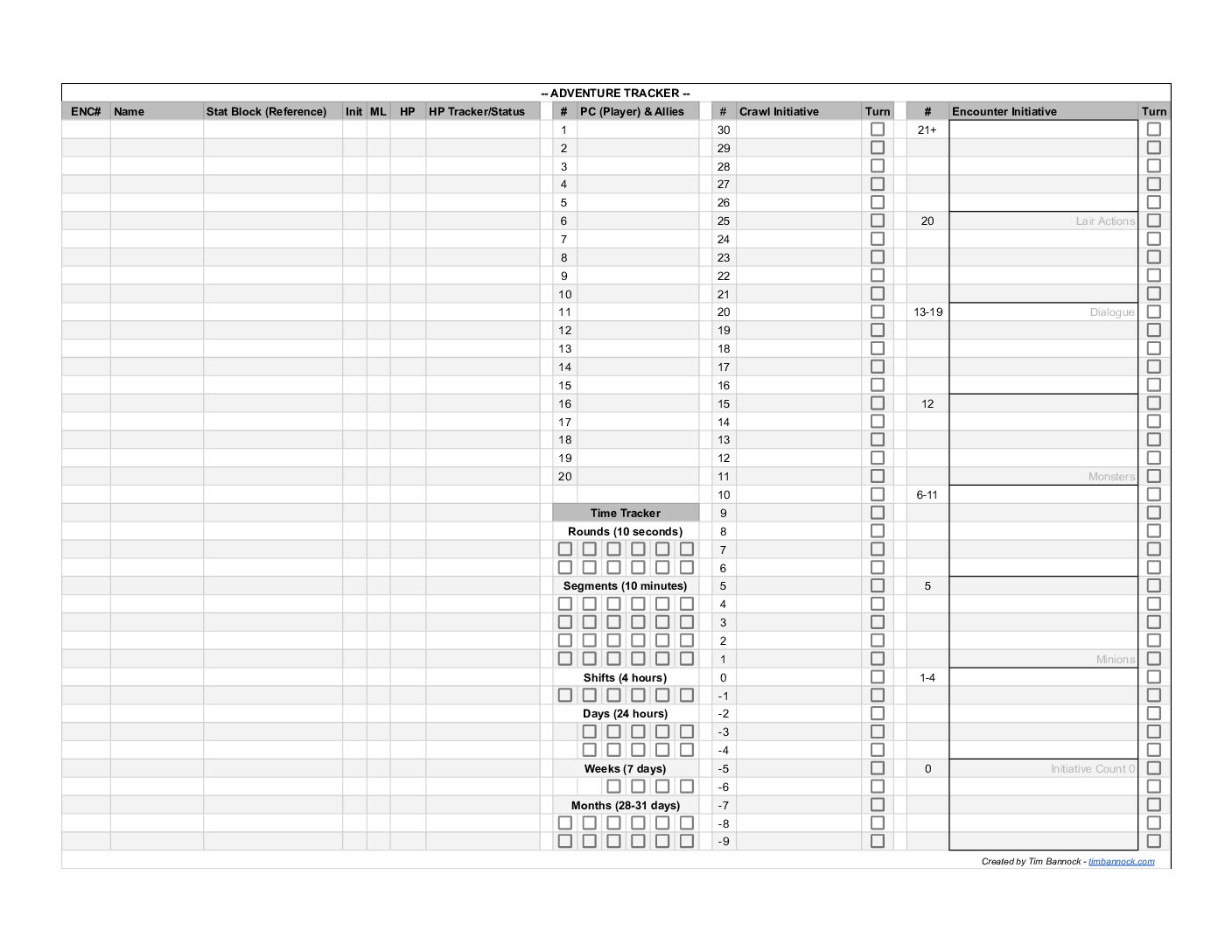
Try This Adventure Tracker for Dungeons & Dragons and Shadowdark In Your Game Sessions

Right before the pandemic, I purchased a slew of tools geared towards optimizing my Dungeons & Dragons game sessions. Among them were a whiteboard GM screen with clips, Inkwell Ideas’ 5E Creature Decks and Deck of Beasts, Pathfinder Pawns, and so much more. Then the pandemic torpedoed the use of most of those things, so I really leaned into going digital. This included taking a multi-day intensive course on organization over at Johnn Four’s Roleplaying Tips. That really expanded my Google Drive, Docs, and Sheets campaign management skills, and helped me reorganize almost every resource I use.

As I’ve gotten back into both in-person and online remote play more often in recent months, I realized I could leverage a much more robust — and still streamlined — way of managing each game session’s encounters. Hence my new Adventure Tracker, which has a lot of really handy features specific to any Dungeons & Dragons or Shadowdark, but applicable to any OSR or D&D-adjacent game. Read on to learn more!

Continue reading

« Older posts

© 2026 Tim Bannock

Theme by Anders NorenUp ↑